Park Mead 2024

Forest School

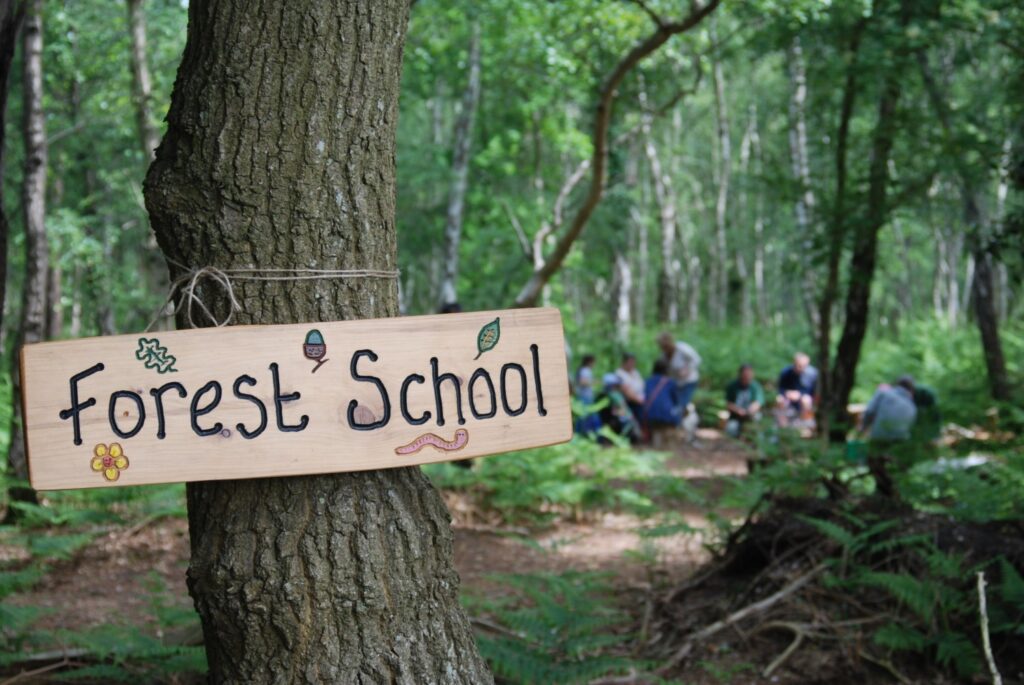
Forest School is an inspirational process, that offers ALL learners regular opportunities to achieve and develop confidence and self-esteem through hands- on learning experiences in a woodland or natural environment with trees. The growing body of research points to numerous benefits to learner, educator, child and parent alike.

Forest School is the name of a specific ethos. Qualified practitioners carefully facilitate programmes which are uniquely tailored to the needs of the individuals within the group and have the fundamental aim of building participants’ self-esteem, confidence, independence and creativity. The name does not refer to an actual place; it refers to the philosophy.

The Impact of this is the knowledge the children have gained from the Forest School experience.

The impact can be seen through skills, art and craft activities, observations and knowledge of the fruit, plants trees in relation to the seasons and the skills involved in learning how to play Forest School games.

The principals of Forest School state that it is:

  • a long-term process of regular sessions, rather than a one-off or infrequent visits; the cycle of planning, observation, adaptation and review links each session.
  • taking place in a woodland or natural environment to support the development of a relationship between the learner and the natural world.
  • using a range of learner-centred processes to create a community for being, development and learning.
  • aiming to promote the holistic development of all those involved, fostering resilient, confident, independent and creative learners.
  • offering learners, the opportunity to take supported risks appropriate to the environment and to themselves.
  • run by qualified Forest School practitioners who continuously maintain and develop their professional practice.

At Forest School all participants (children and adults) are viewed as:

  • equal, unique and valuable
  • competent to explore & discover
  • entitled to experience appropriate risk and challenge
  • entitled to choose, and to initiate and drive their own learning and development
  • entitled to experience regular success
  • entitled to develop positive relationships with themselves and other people
  • entitled to develop a strong, positive relationship with their natural world

This ethos creates learning communities where deep-level learning and progression are the norm.

www.forestschoolassociation.org/full-principles-and-criteria-for-good-practice

Forest School Blog
The last session of Forest School of the year brings a time of reflection. The whole class thought about their read more
The last Forest School session of the year brings a time of reflection. The whole class thought about their Forest read more
To start the session, Willows class talked about how milk comes from cows and how it is a liquid like read more
This term Willows topic is all about growing. Today the children learnt how to identify buttercups and daisies at school. read more
This week the class helped to transport some woodchip down to the shelter area to help combat the wet, muddy read more
This term Chestnuts topic is all about growing, so this week the children planted some tree saplings along the boundary read more

Oaks Forest School

The last session of Forest School of the year brings a time of reflection. The whole class thought about their Forest School experience and the IMPACT it has had on them this year. The Impact of Forest School for the children is the knowledge the children have gained from the Forest School experience. The impact can be seen through the skills, tools used, art and craft activities, observations and knowledge of the fruit, plants trees in relation to the seasons and the skills involved in learning how to play Forest School games.

YOU – Has Forest School affected how you feel about yourself and your well-being? If so how?

I feel energetic and happy…I like the fresh air”
“It makes me feel free…and happy that I can connect with nature”
“It takes me out of my life and makes me feel free”

NATURE – Has Forest School affected how you feel about nature? If so how?

“It makes me like trees more”
“I saw bunnies and it fascinated me”
“I am happy to be able to connect myself to nature”
“I already loved nature, so it is great”
“It has made us understand Mother Nature and the earth more”
“I have learned some things you can and can’t eat”
“I feel really good after Forest School, even if I am having a bad day”

LEARNING – What skills did you learn or develop this year at Forest School?

“I learned how to toast marshmallows to make smores”
“Balancing on the slack line….and how to put it up and take it down”
“I used a knife to make a mushroom out of wood”
“Fire making and crafting with wood”
“I learned how to cook and how to use a knife safely”
“I have learned how to make a pencil out of wood”
“How far I can climb up a tree”
“den building”
“How to make dandelion pancakes on a fire”
“What activities did you enjoy most or would like to do more of?
“I like playing with my friends…teamwork, creativity and aiming high”
“Making things like mud soup in the mud kitchen”
“I likes making the bricks out of clay”
“I liked making bacon sandwiches…and all of it”
“I loved digging the massive hole”
“Free play in the woods is my favourite”
“I loved making things with elder pens and pancakes”
“I like that there is a big range of activities that you can do”
“I would like to go on the swing more”

What did you like about the woodland space and Forest School environments?

“I like the trees…It is fun to climb on trees and play”
“I like my friends in the woods”
“I don’t like the nettles and thistles…you can use a dock leaf if you get stung”
“I don’t think the woodland needs to be improved, it is amazing enough as it is”

So many of the children were successful at independently starting a fire by the end of the session.

Once the fire was going, the class sorted some blackcurrants from their stems and leaves. We boiled up the berries to create paint and added sugar to some to make jam.

For the ink, we crushed ½ cup of berries through a sieve into a bowl. Added 1tsp of salt and 1tsp of vinegar. The vinegar binds the pigment and the salt preserves the ink. This is a traditional ink used in the 1600s. The children then used the ink to decorate fabric.

We took a jar of cream to try to create butter. The children took it in turns to shake the jar furiously throughout the afternoon and in the end it changed to make butter, which they tasted with crackers. Delicious!Then there was time to explore and play in the woodland. Oaks showed particular interests in physical risks and
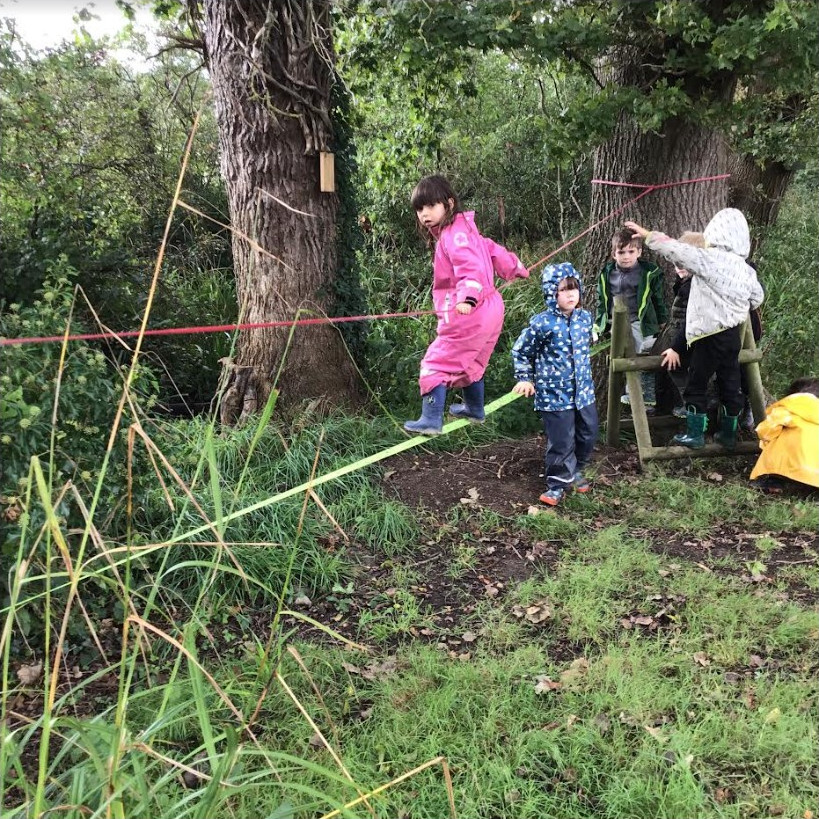
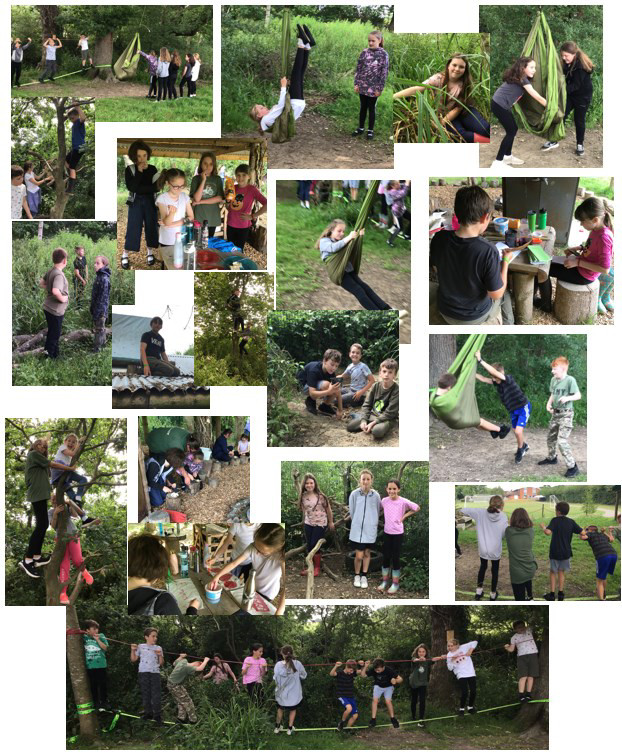
challenges. They learned how to set up and take down the new slack line and hammock, thinking about the knots used to fix them safely to the trees and how to balance and manage their risks safely.

Maples Forest School

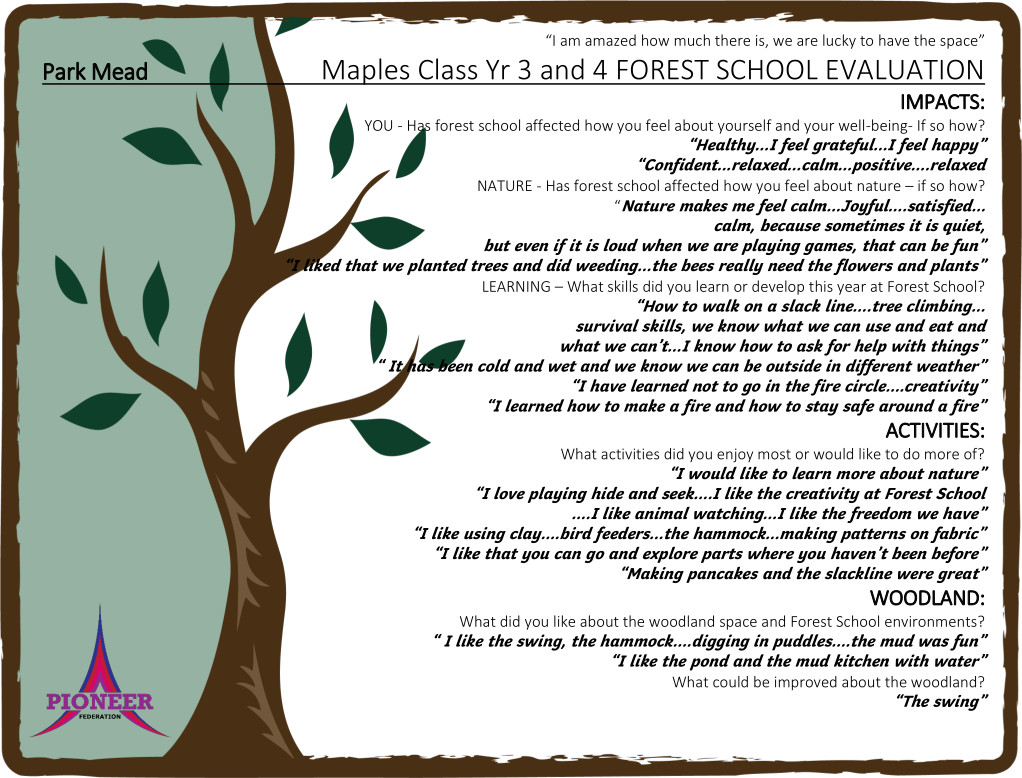
The last session of Forest School of the year brings a time of reflection. The whole class thought about their Forest School experience and its IMPACT on them this year. In small groups they chatted and we recorded some of their ideas. The Impact of Forest School for the children is the knowledge the children have gained from the Forest School experience. The impact can be seen through the skills, tools used, art and craft activities, observations and knowledge of the fruit, plants trees in relation to the seasons and the skills involved in learning how to play Forest School games.

Has forest school affected how you feel about yourself and your well-being- If so how?

Healthy…I feel grateful…I feel happy…Confident…relaxed…calm…positive….relaxed

Has forest school affected how you feel about nature – if so how?

Nature makes me feel calm…Joyful….satisfied…calm, because sometimes it is quiet, but even if it is loud when we are playing games, that can be fun”

“I liked that we planted trees and did weeding…the bees really need the flowers and plants”

What skills did you learn or develop this year at Forest School?

“How to walk on a slack line….tree climbing…survival skills, we know what we can use and eat and what we can’t…I know how to ask for help with things…It has been cold and wet and we know we can be outside in different weather”

“I have learned not to go in the fire circle….creativity…I learned how to make a fire and how to stay safe around a fire”

What activities did you enjoy most or would like to do more of?

“I would like to learn more about nature…I love playing hide and seek….I like the creativity at Forest School….I like animal watching…I like the freedom we have…I like using clay….bird feeders…the hammock…making patterns on fabric”

“I like that you can go and explore parts where you haven’t been before…Making pancakes and the slackline were great”

What did you like about the woodland space and Forest School environments?

“ I like the swing, the hammock….digging in puddles….the mud was fun…I like the pond and the mud kitchen with water”

What could be improved about the woodland?

“The swing”

 This midsummer’s day the children collected samples of wildflowers and plants on sticky tape to practise their plant identification knowledge, they tried to create the colours of the rainbow. They talked about, buttercups, daisies, clover and pine needles. The class noticed there were lots of yellows and greens, but not many oranges and blues.

We took a jar of cream to try to create butter, inspired by the buttercup flowers covering the field. The children took it in turns to shake the jar furiously throughout the afternoon and in the end it changed to make butter, which they tasted by spreading it onto crackers! The children discussed the changing state of matter from liquid to solid with liquid and were amazed at how simple it was to make butter.

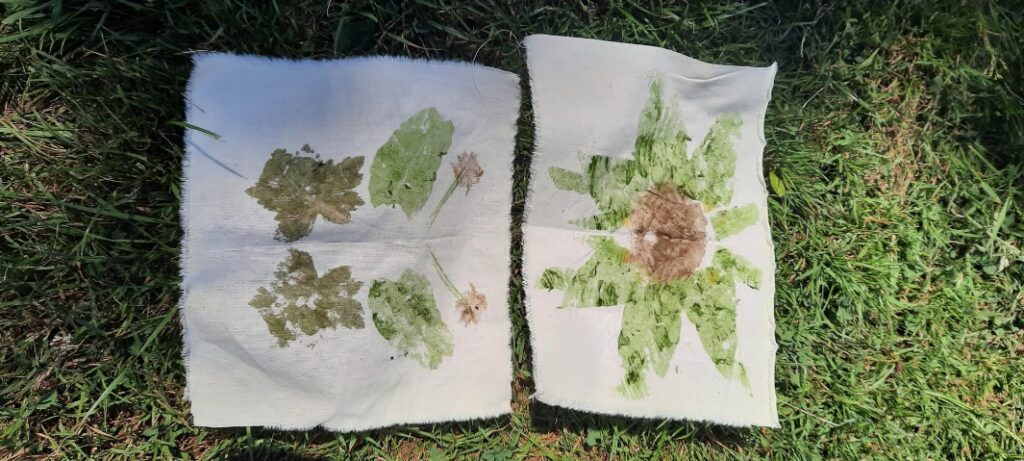
This week the children developed their use of tools by creating printed flower butterflies on fabric. They tapped the juices of each plant out onto fabric to create symmetrical butterflies. There was some great creative thoughts and designs, with the children making intricate insect and butterfly prints. Then there was time to explore and play in the woodland area. The Maples class showed particular interests in physical risks and challenges. They loved the mud kitchen area and spent a long time using the hand wash to create bubble mixtures and then wash all of the pots and pans in the kitchen!

Now that summer has created taller growing plants, the class remembered the games they played last session and spent some time hiding. This lead to a game of ‘Owl eyes’, where the children had 10 seconds to hide and then see if they could remain camouflaged and quiet enough that they couldn’t be seen.

Maples Impact Evaluation

Chestnuts Impact Evaluation

Chestnuts Forest School

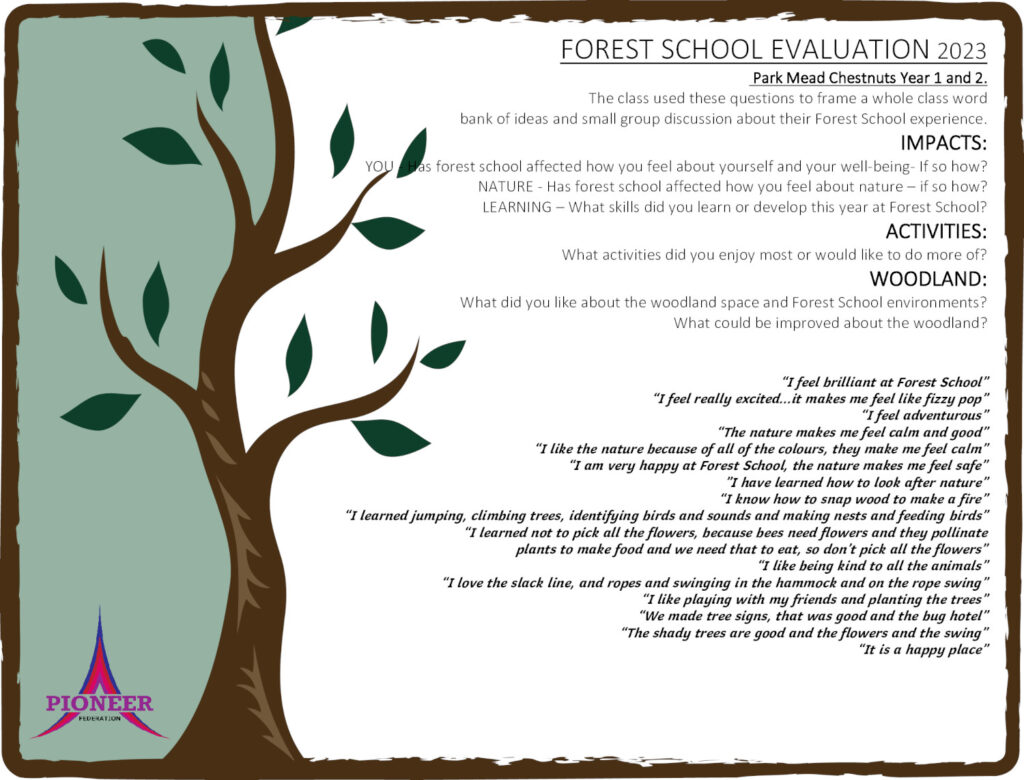
The last Forest School session of the year brings a time of reflection. The whole class thought about their Forest School experience and it’s IMPACT on them. In pairs they chatted and recorded some of their ideas. The Impact of Forest School for the children is the knowledge the children have gained from the Forest School experience. The impact can be seen through the skills, tools used, art and craft activities, observations and knowledge of the fruit, plants trees in relation to the seasons and the skills involved in learning how to play Forest School games.

“I feel brilliant at Forest School”
“I feel really excited…it makes me feel like fizzy pop”
“I feel adventurous”
“The nature makes me feel calm and good”
“I like the nature because of all of the colours, they make me feel calm”
“I am very happy at Forest School, the nature makes me feel safe”
”I have learned how to look after nature”
“I know how to snap wood to make a fire”
“I learned jumping, climbing trees, identifying birds and sounds and making nests and feeding birds”
“I learned not to pick all the flowers, because bees need flowers and they pollinate
plants to make food and we need that to eat, so don’t pick all the flowers”
“I like being kind to all the animals”
“I love the slack line, and ropes and swinging in the hammock and on the rope swing”
“I like playing with my friends and planting the trees”
“We made tree signs, that was good and the bug hotel”
“The shady trees are good and the flowers and the swing”
“It is a happy place”

Then year 1 and 2 set off for their session together on a sunny, hot afternoon to the cool shady Forest School space under the trees. The children collected samples of wildflowers and plants on sticky tape, they tried to collect as many different colours as they could. They talked about, buttercups, daisies. clover, oak leaves, oak leaves and grasses.

We took a jar of cream along the way to try to create butter, inspired by the buttercups. We shook the jar furiously throughout the afternoon and in the end it changed to make butter, which they tasted with crackers. It turns out the buttercups were correct- they do like butter, it was delicious!

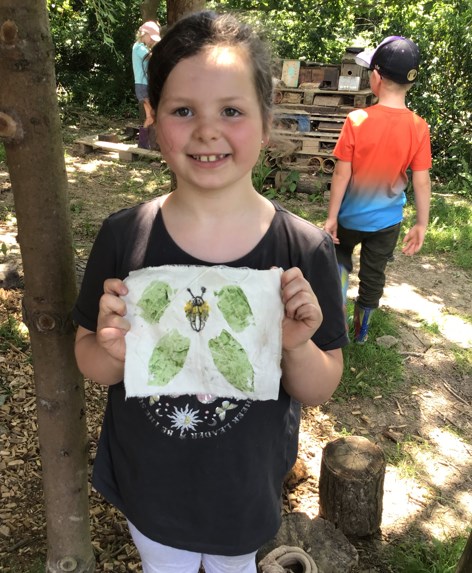
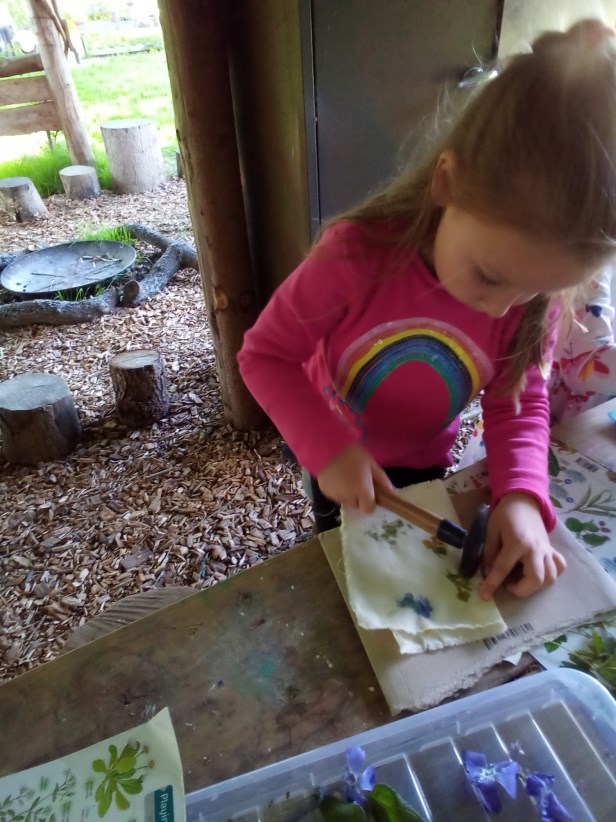
This week the children created butterflies with paper and pastels, taking care to try to make symmetrical butterflies. Some children then went on to create leaf and flower printed butterflies on fabric, by hammering the plants and seeing the result as a symmetrical print on the fabric. The children took such care and showed some brilliant individual ideas.

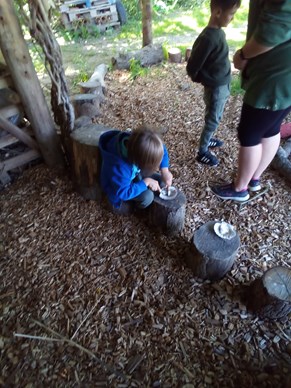
The class spent time playing in the dens they have made, swinging on the rope swing, balancing on the slack line, swinging and pushing each other on the hammock and climbing trees. The mud kitchen was really busy with children creating fantastic muddy mixtures and a lot of flower rich soups and stews. Well done Chestnuts, what a busy afternoon!

Willows Forest School

To start the session, Willows class talked about how milk comes from cows and how it is a liquid like water. We poured cream into a jar to try to create butter, inspired by the buttercups growing all over the school and Forest School site. The children took it in turns to hold buttercups under each other’s chins and to shake the jar furiously throughout the afternoon and in the end, they created butter, which they tasted with crackers in the shelter! They were so good at spreading their own crackers independently with a knife. It turns out the buttercups were correct- they do like butter!
On the way down the school field, the children climbed along the trim trail, showing great perseverance and physical challenge. The children worked together to hold a white sheet out under some different trees. Once the trees were shaken, the class could easily see what flowers, seeds, leaves and bugs fell out.

“There is a green beetle…and we found a spider… and some flowers”

We identified, collected and smelled the scent of some elderflowers and cooked them on the fire to make elderflower pancakes. The children carefully checked it for bugs, then dipped the elder flowers in egg free batter. After lighting the fire, which the children did with great perseverance and enjoyment the elder pancakes were cooked in a pan. They tasted sweet and delicious!

This week the children continued ‘leaf wapping’; printing with leaves and flowers. They developed their ideas from last time, by finding sticks and threading them onto the fabric to create flags. They also proudly showed off the bunting in their outside area, which had been made from the fabric leaf prints they created last term- it looks fantastic! This term the Willows topic is all about water, so the children enjoyed playing in the mud kitchen this afternoon, mixing mud, flowers, leaves and other plants with water. They noticed what floated and sank in the water.

“Mud goes to the bottom….it sinks”

“The buttercups are floating on top of the water….like marshmallows in a hot chocolate!”

We looked at how our wildflower seeds that the children had sprinkled around the site had developed and watered them, along with the trees which the children planted during the last sessions. Some of the class spent time exploring, climbing trees and playing games with their friends. There was lots of time spent with much enjoyment on the slack line and the hammock swing. What a busy afternoon, well done Willows!

The Impact of Forest School for the children is the knowledge the children have gained from the Forest School experience. The impact can be seen through the skills, tools used, art and craft activities, observations and knowledge of the fruit, plants trees in relation to the seasons and the skills involved in learning how to play Forest School games.

Willows Forest School

This term Willows topic is all about growing. Today the children learnt how to identify buttercups and daisies at school. We talked about the importance of not picking wild flowers and plants unless an adult had said it was safe to do so. The children talked about how some plants might sting and prickle them, how they might be poisonous and how important they are to insects.

On the way down the school field, the children played a game of ‘beetle tag’, taking it in turns to be beetles and birds to chase and tag each other.

The children collected buttercups and daisies, along with different leaves, green alkanet, forget me not, herb robert and periwinkle flowers, all from the grounds of Park Mead School. They then printing them onto fabric. They thought about where to place the leaves, folded their fabric in half and tapped carefully with hammers to print the pattern and colour from the leaves to make some lovely designs. The children then went on to cut holes in the fabric to make flags by attaching them to sticks.

We looked at how the wildflower seeds that the children had sprinkled around the site previously had developed. We then watered them, along with the trees the children planted during our last session. Some of the class spent time exploring, climbing trees and playing games with their friends. They spent lots of time in the mud kitchen cooking and had much enjoyment on the slack line and the hammock swing. What a busy afternoon, well done Willows!

At the end of the session, the children took it in turns to hold ‘Stick Man’ and share what they had enjoyed about the afternoon.

“I liked balancing on the rope….yes and swinging on the hammock”

“I liked making cheese sandwiches and coffee in the mud kitchen”

“I liked making hot chocolate in the mud kitchen, I mixed in buttercups, mud and grass with the water”

“I liked printing with leaves and making a flag…I made 2!”

“I liked watching the game of ‘beetle tag’, all the children played really well”

The Impact of Forest School for the children is the knowledge the children have gained from the Forest School experience. The impact can be seen through the skills, tools used, art and craft activities, observations and knowledge of the fruit, plants trees in relation to the seasons and the skills involved in learning how to play Forest School games.

Oaks Forest School

This week the class helped to transport some woodchip down to the shelter area to help combat the wet, muddy ground. They worked with spades, wheelbarrows and buckets together to carry and spread out the woodchip under the shelter area, to create a better surface for everyone using the site. It looks fantastic and has made a great difference to everyone at Park Mead who will use the space- well done Oaks!

Part of the Forest School experience is about risk and challenge and taking responsibility for their individual choices and actions. We talked about how to assess risk and how to use tools, techniques and the Forest School area as safely as we could.

They collected some sticky weed and made crowns adorned with dandelions. Some of the children tried a sticky weed juice which we had made. They collected the plant, washed it, carved off some bark from a hazel stick and pounded it in clean drinking water until the water turned green. Then more sticky weed was made into a nest shape, used as a sieve and it was ready to taste.

Then there was time to explore and play in the woodland. Oaks showed particular interests in physical risks and challenges. They learned how to set up and take down the new slack line and hammock, thinking about the knots used to fix them safely to the trees and how to balance and manage their risks safely.

This week some of the children continued to develop their tool skills, by using knives to carve with. They were great at listening to learn how to use the tools in a safe way. First they used pruning saws to cut the wood to a useable length. Then they had a go at peeling bark and sharpening the ends of sticks. Some children started to create patterns on their ticks and even tried to carve small mushrooms.

The Impact of Forest School for the children is the knowledge the children have gained from the Forest School experience. The Impact can be seen through the skills, tools used, art and craft activities, observations and knowledge of the fruit, plants trees in relation to the seasons and the skills involved in learning how to play Forest School games.

Maples Forest School

This week the class helped to transport some woodchip down to the shelter area to help combat the wet, muddy ground. They worked together with spades, wheelbarrows and buckets to carry and spread out the woodchip which created a better surface for everyone using the site. It looks fantastic and has made a great difference to everyone at Park Mead who will use the space – well done Maples!

Part of the Forest School experience is about risk and challenge and taking responsibility for their individual choices and actions. We talked about how to assess risk and how to use tools, techniques and the Forest School area as safely as we could.

Maples continued to practise their fire lighting skills this week; recalling the skills practised in their last 2 sessions. They showed great perseverance when trying to create sparks to ignite their fire and showed good peer to peer support; demonstrating how to use fire strikers and encouraging each other with the challenge. Once the fire was alight, the children cooked some egg free dandelion pancake lollipops by dipping them in batter and frying them on the fire. It was good to see the children trying new and unfamiliar foraged food.

Then there was time to explore and play in the woodland. Maples showed particular interests in physical risks and challenges.

Maples enjoyed getting messy in the mud kitchen and digging channels for any excess rainwater to flow away.

They planted two more sapling trees along the roped border of the Forest school space.

The children continued playing with the toy birds in the Forest School area and spent a long time creating animals and creatures out of clay.

Now that spring has finally sprung, the class noticed how the plants have really grown and spent some time hiding. This lead to a game of ‘Owl Eyes’, where the children had 10 seconds to hide and then see if they could remain camouflaged and quiet enough so that they couldn’t be seen.

We finished with a game of ‘Fox and Rabbit’, where the children had to work together to be a ‘warren’, defending the rabbit from its fox predator.

The Impact of Forest School for the children is the knowledge the children have gained from the Forest School experience.

The Impact can be seen through the skills, tools used, art and craft activities, observations and knowledge of the fruit, plants trees in relation to the seasons and the skills involved in learning how to play Forest School games.

Chestnuts Forest School

This term Chestnuts topic is all about growing, so this week the children planted some tree saplings along the boundary with the field, looking carefully at the complexity of the roots of the saplings and how the shoots were developing this year’s new leaves. They found lots of worms and woodlice when they were digging and used a mini beasts identification sheet to check what they had found. We spent some time banging in stakes around the sapling trees to support and protect them to help them grow.

The saplings are hawthorn, silver birch and rowan. Referring to information in books and tree identification cards, Chestnuts created some lovely ID tags to hang on the trees in the Forest School area. Some of the children also tried making bark rubbings of the oak tree bark with paper and wax crayons.

The children put up two planters on the mud kitchen and filled them with compost and some butterfly friendly wild flower seeds and gave them a good water to help them start to germinate and then grow. They also planted some of the wild flower seeds carefully around the base of their newly planted saplings.

The class spent time playing in the dens they have made, swinging on the rope swing and climbing trees. We noticed that there were tadpoles in the pond, so the class had an enjoyable time watching them dart around the pond. The mud kitchen was really busy, with children creating fantastic muddy mixtures and a ‘scrumptious stew!’

The Impact of Forest School for the children is the knowledge the children have gained from the Forest School experience. The impact can be seen through the skills, tools used, art and craft activities, observations and knowledge of the fruit, plants trees in relation to the seasons and the skills involved in learning how to play Forest School games.